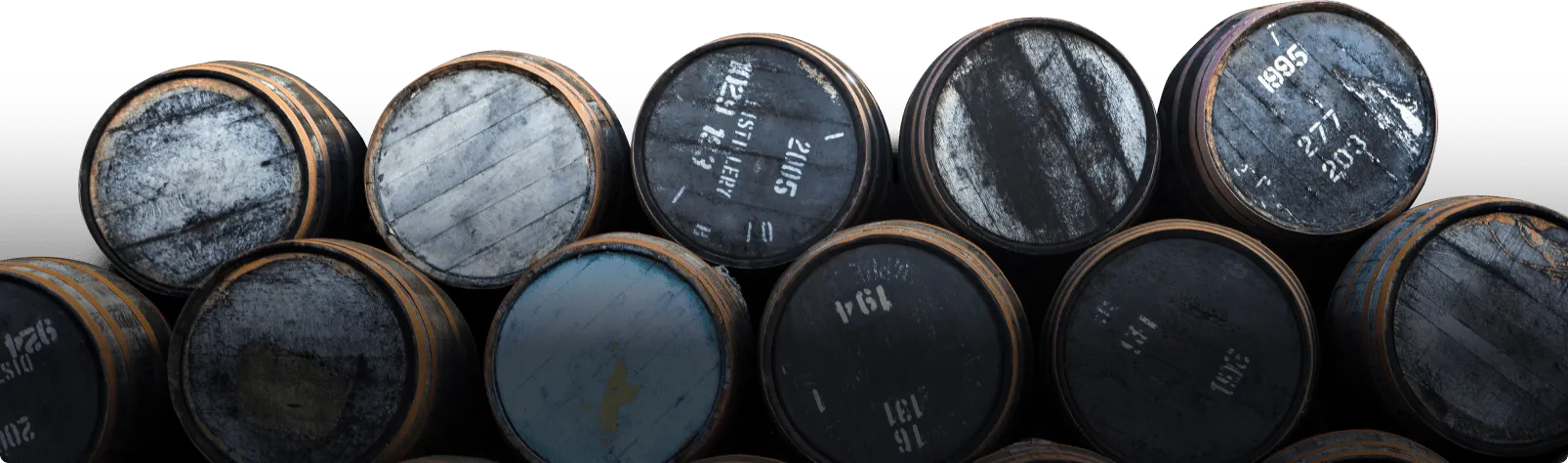
A £130 cask now worth £270,000 – what it tells us about whisky
A cask of single malt bought for £130 in 1971 has just been listed at £270,000. It is one of the clearest illustrations yet of what time does to good whisky – and of why the cask, not the bottle, is where the value quietly builds.
- In 1971, Surrey commodities trader Angus Kerr paid £130 for a cask of new-fill Glenrothes single malt.
- He bought it to help cover school fees, planning to sell five years later.
- The seller went bust and he lost track of the cask entirely.
- Years later a Glasgow warehouse contacted him – for unpaid storage.
- Now 81, he has finally brought it to market at £270,000, believed to be the oldest cask of its kind still in existence.
A purchase he almost forgot about
Mr Kerr, now 81, heard about a company selling barrels of new-fill whisky and treated it as a punt rather than a strategy. “I thought at least I can go for a swim in it if it all goes belly up,” he said.
The plan was simple: hold for five years, sell at a profit, put the money towards school fees. Then the company selling the cask collapsed and the paper trail went cold. “I just threw my hands in the air and thought, ‘OK, that was silly’,” he recalled.
What saved the investment was the least glamorous part of the whole business: someone kept the cask in a bonded warehouse and kept the paperwork. A Glaswegian firm eventually tracked him down to ask for storage fees – proof that the whisky was still there, still maturing, still his.
“It could have lost its alcohol content or ended up being very oaky and horrible, so it’s very fortunate.”
Why the numbers are so large
Fifty-seven years of maturation does two things at once. It concentrates and refines the spirit – and it destroys most of the competition. Casks are lost, mismanaged, bottled early, or simply dry out. Very few 1970s first-fill casks of a named Speyside distillery survive intact and drinkable, and scarcity is what the market pays for.
The cask still holds enough whisky for roughly 287 bottles. At £270,000, that is a little over £940 a bottle before bottling, duty and marketing – which is why brokers and independent bottlers, not private drinkers, are the likely buyers.
Four lessons for anyone holding a cask
- Time is the active ingredient. Nothing else in this story did any work. The whisky appreciated because it was left alone in good wood, in a good warehouse, for decades.
- Paperwork is the asset. A cask you cannot prove you own is a cask you cannot sell. Delivery orders, warehouse receipts and regauge records matter as much as the liquid.
- Where it sleeps matters. HMRC-bonded storage protects the spirit, the duty position and the provenance. Mr Kerr’s cask survived because a professional warehouse kept it properly.
- Exit route beats entry price. He lost twenty years to a collapsed seller with no route to market. A broker relationship is what turns a stored cask into a realised price.
Our take
Stories like this one make headlines because the multiple is extraordinary – but the mechanics are ordinary and repeatable. Buy quality spirit from a distillery worth waiting for, store it properly under bond, keep the documentation clean, and give it real time. That is the whole model, and it is the model we run for our clients every day.
Whisky is a long-hold asset, and its value is not guaranteed.
Reported details of the Glenrothes cask sale via BBC News / BBC Radio Surrey, 25 August 2026. This article is for information only and is not financial advice. The value of cask whisky can fall as well as rise.
Please enquire for Glenrothes availability. We’ll help you select a cask, store it under bond, and follow it from new-fill to bottling.
Whisky market news, cask releases and event invitations. One email, once a month. No spam, unsubscribe any time.
Own a cask and unsure what it’s worth, or looking to buy your first? Send us a note and we’ll come back to you.
Whisky as an investment — please read before making any purchase
This communication is for informational purposes only and does not constitute financial or investment advice. WHISKYBYTIME is not a regulated financial institution, and any references to “investment”, “broker” or “advice” are used solely to describe our services and should not be interpreted as financial recommendations. Please read the following carefully before making any purchase.
Read the full disclaimer
WHISKYBYTIME is not authorised by the Financial Conduct Authority (FCA) and does not provide financial or investment advice. We operate as a whisky platform offering impartial guidance to help customers explore their options—not to instruct them on what to buy. References to “investment”, “brokers” or “portfolio management” are for general context only and do not imply FCA-regulated services.
Whisky is sold as a physical, collectible asset—not a financial product. It is not FCA-regulated, and purchasing whisky carries distinct risks compared to traditional investments like stocks or bonds. Decisions should be based on independent research and personal judgment.
Whisky values fluctuate based on market demand, age, rarity and other factors. The volume of spirit diminishes over time (the “Angels’ share”), and “New Make” spirit must mature for at least 3 years while maintaining a minimum 40% ABV to qualify as whisky. Fees apply (see Terms and Conditions), and past performance does not indicate future results. WHISKYBYTIME makes no guarantees on returns, profitability or resale value.
Reselling whisky can be subject to market conditions, with no assurance of speed or profit. Liquidity risks should be carefully considered. Any mention of “investment goals” or “returns” is hypothetical and not a promise of financial gain.
Our team members, sometimes referred to as “consultants” or “brokers”, are specialists in whisky as a collectible—not regulated financial advisors. Customers are encouraged to seek independent financial advice for investment decisions.
WHISKYBYTIME’s sale price includes a markup covering operational costs such as storage, insurance, cask maintenance and administrative services. This margin supports business sustainability but may impact potential profitability due to the spread between acquisition and resale prices. By purchasing through WHISKYBYTIME, you acknowledge understanding these terms and the inherent risks of whisky ownership. You have 14 days to cancel for a full refund under our cooling-off period.
The Company does not guarantee, represent or warrant that the Client’s Stock can or will be sold, resold, transferred or otherwise realised at any particular time, including within five (5) years of purchase. Any reference to a five-year period is an indicative minimum holding period only and does not constitute a guarantee of liquidity, buyer availability, resale value, profit or return. The Client acknowledges that market conditions may require the Stock to be held for substantially longer than five years. Unless expressly agreed otherwise in a separate written agreement signed by the Company, the Company shall have no obligation to purchase, repurchase, market, broker or arrange the sale of the Client’s Stock.